

Water. Earth. Fire. Air. The Evidence of Wellbeing — A New Series
- EK Wills

- May 11
- 3 min read
As a psychiatrist, I spend my days working with people whose mental health is suffering. I prescribe medication. I refer for therapy. I think carefully about risk. That's the work, and I believe in it.
But for years, I've also been quietly fascinated by something else: the growing body of evidence for wellbeing interventions that sit outside the clinic — in nature, in water, in heat and breath — and what they might offer alongside conventional care.
The research has been accumulating for decades. Social prescribing is now recognised in Australian national mental health policy. Nature-based interventions are the subject of serious clinical trials. And yet almost none of this has made it into everyday practice, because it doesn't arrive in a referral letter or a blister pack.
So I decided to stop just reading the research and start living it.
Introducing The Evidence of Wellbeing
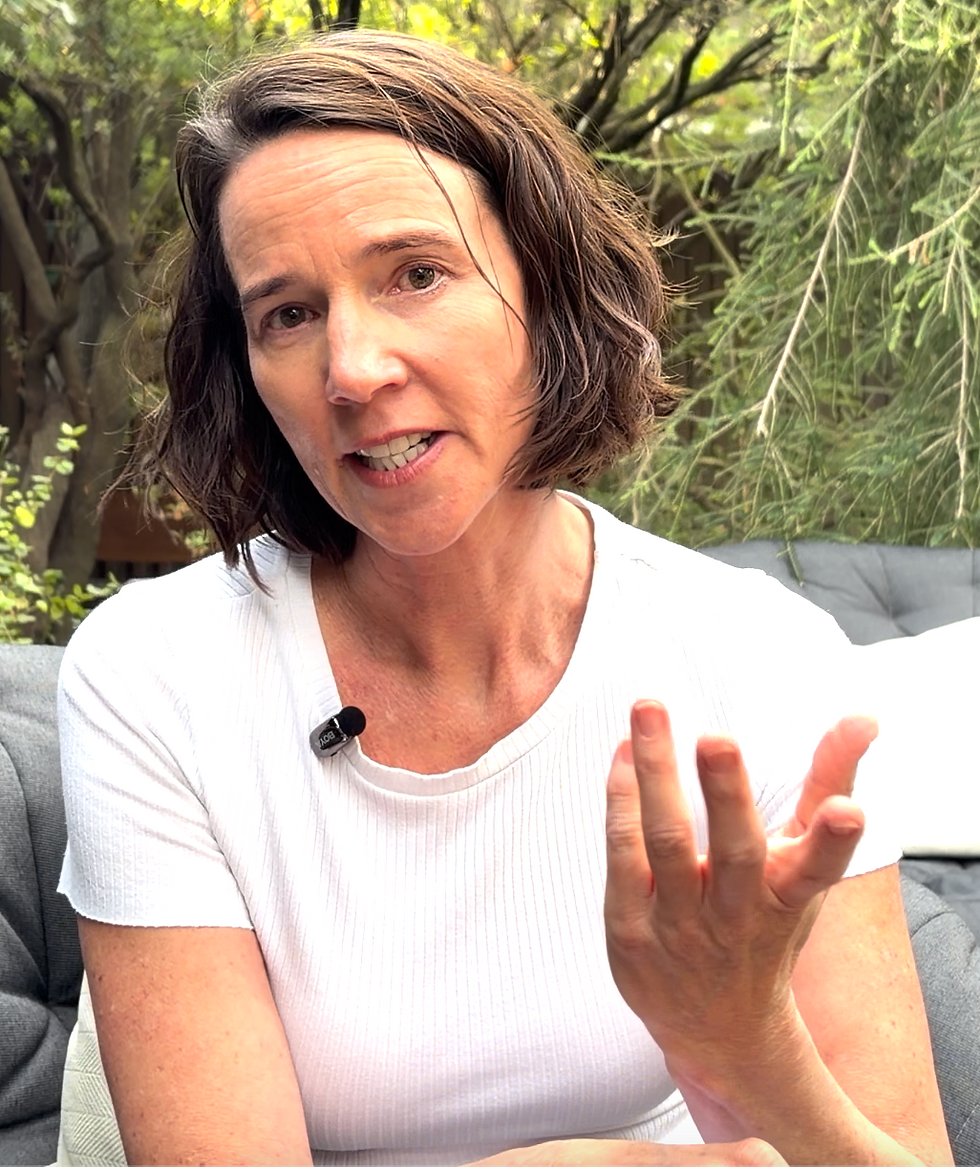
The Evidence of Wellbeing is a self-filmed science communication series — think Michael Mosley, but with a psychiatrist, a smartphone, and a small tripod — where I personally explore wellbeing interventions with emerging evidence for mental health benefits. Each episode follows one of four elements: Water, Earth, Fire, and Air.
Our skeleton crew is exactly two people: me, and my wonderfully supportive husband, who has enthusiastically taken on the role of cameraman, sherpa, and chief encourager. No lighting rigs, no production company. Just us, the science, and whatever the experience actually feels like on the day. I measure my mood before and after using a validated scale. I present the evidence honestly, including its limitations. And I try to model what it looks like when a clinician applies the same critical eye to their own experience as they would to a clinical trial.
Episode 1 — The Healing Heat
The first episode takes me to Peninsula Hot Springs on the Mornington Peninsula. I wanted to understand what hot water actually does to the brain — beyond the obvious "it's relaxing."
What I found genuinely surprised me. There is real, peer-reviewed science behind thermal bathing: randomised controlled trials showing significant reductions in depression scores, serotonin pathways activated by heat that mirror the mechanism of commonly prescribed antidepressants, and head-to-head comparisons with structured exercise programs. Balneotherapy isn't folk medicine. It has a clinical evidence base that most people — including most clinicians — don't know exists.
I'll let you watch to find out what the mood scale showed.
Episode 2 — The Breathing Earth

The second episode brings me into the eucalyptus forest of Lane Cove National Park in Sydney, for a guided forest bathing walk with Forest Minds.
Shinrin-yoku. Phytoncides. NK cells. Cortisol. Mycobacterium vaccae in the soil beneath your feet. The science of what happens to your body and brain inside a forest is remarkable — and almost none of it has made it into mainstream mental health practice yet.
I also wanted to make a point that I think is important: almost all of the forest bathing research comes from Japan and Korea. Cedar forests. Cypress groves. Pine. We are standing in Australian bush — eucalypts, angophoras, scribbly gums. Whether our forests produce the same effects on the nervous system is a question Australian researchers are only just beginning to ask. A clinical trial is currently underway. And I think it matters enormously that we build our own evidence, in our own landscape, with our own people.
Why I made this series
I didn't make this to replace clinical care. I made it because I believe evidence-based tools are being left on the table — not because the science isn't there, but because the science hasn't found its way into the consulting room yet.
There is something I hope is powerful about a psychiatrist saying: I tried this myself. Here is what the research says. Here is what I felt. Here are the caveats. Here is why it still matters.
That's the series. That's the intention.
What's coming

Both episodes are currently in the editing suite with a trusted friend and colleague from my film school days (Gareth @frontandcentremedia), with release planned for later this winter.
Episodes 3 and 4 — exploring Fire (heat, sauna, and light therapy) and Air (breathwork and cold exposure) — will be filmed later this year, completing the four-element arc.
If this kind of work resonates with you — whether you're a clinician, a researcher, or simply someone curious about what the evidence actually says about wellbeing — I'd love to have you along for the journey.
Stay tuned. There's a lot of science, a few surprises, and at least one moment where I am visibly out of my comfort zone.
The MotherMind Doctor
Consultant Psychiatrist | Creator, The Evidence of Wellbeing


Comments